PortfolioWSense
Connecting the last unconnected frontier: our journey with WSense
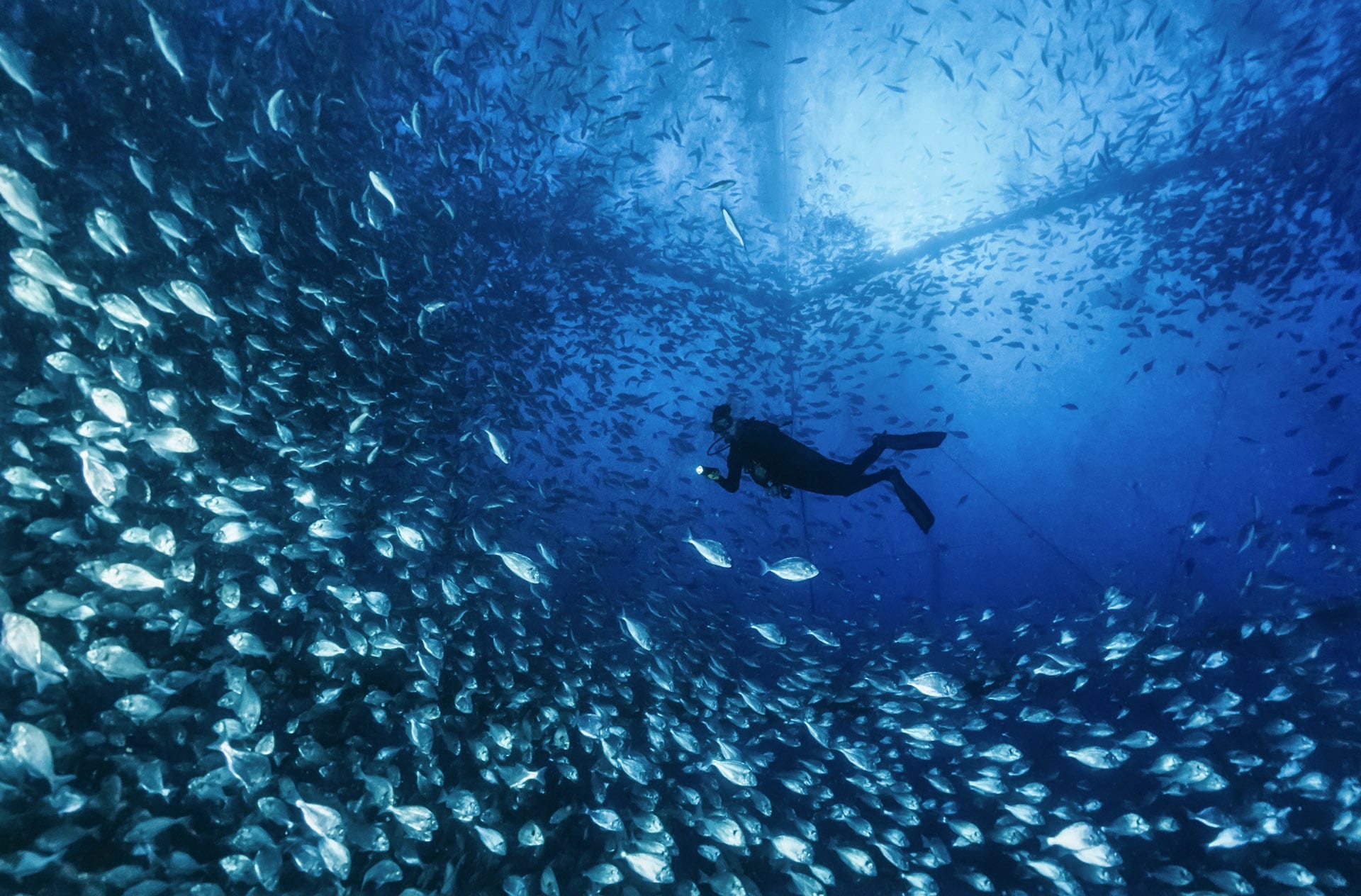
Almost everything around us has become connected. The ocean is different.
From a first meeting through the Deep Tech Alliance to industrial partnerships, follow-on investment and now a majority acquisition by Fincantieri, WSense has been a powerful example of what can happen when deep technology meets real industrial demand.
People. Cars. Factories. Energy systems. Machines. Entire cities. Below the surface, transmitting data remains extraordinarily difficult. The technologies we take for granted on land do not work in the same way underwater. That means many of the assets we increasingly depend on, from energy infrastructure and subsea cables to autonomous vehicles, sensors and environmental monitoring systems, still operate in an environment where communication is constrained.
WSense is changing that. The company is building the communication layer for the underwater world, creating wireless networks that allow sensors, robots, autonomous vessels and other subsea assets to exchange data and connect back to systems above the surface.
Or put more simply: WSense is helping connect the last unconnected frontier.
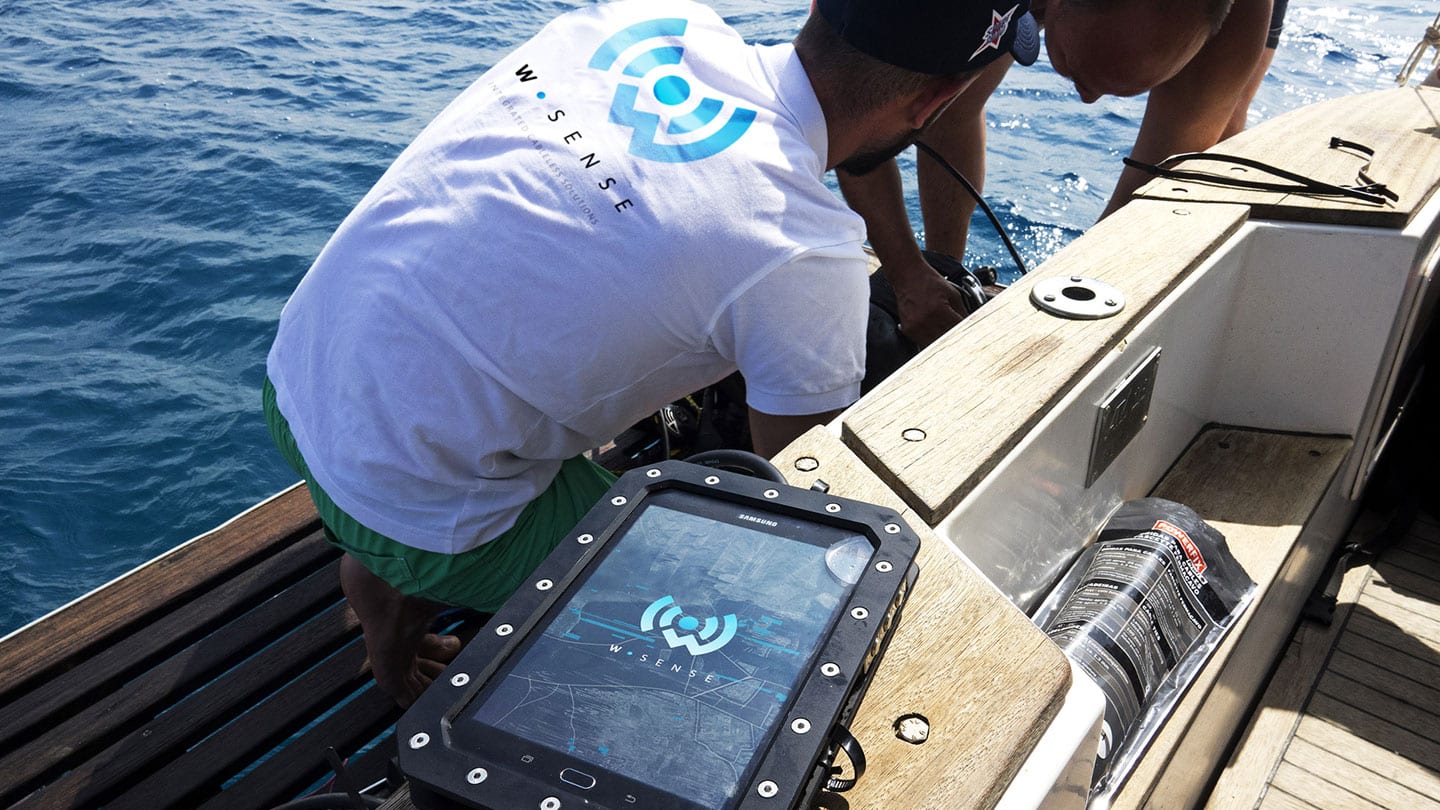
01Building an internet for the underwater world
WSense grew out of research at Sapienza University of Rome and began commercial operations in 2017. Today, the company has more than 80 engineers and professionals and operates across Europe and beyond, with offices including Rome, Bergen and London.
Its technology is sometimes described as “underwater Wi-Fi”. It is a useful analogy, but the engineering problem is considerably more complex.
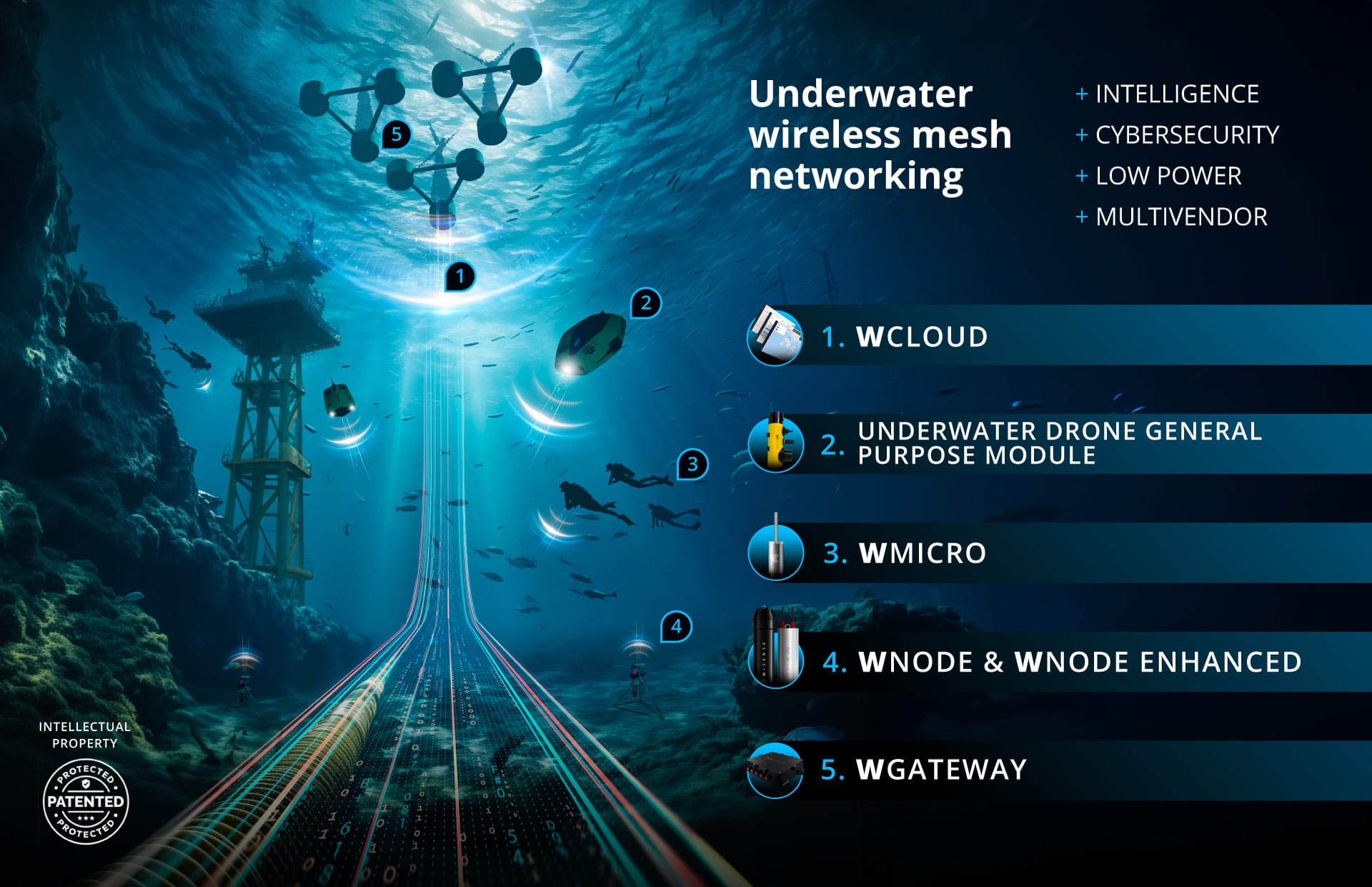
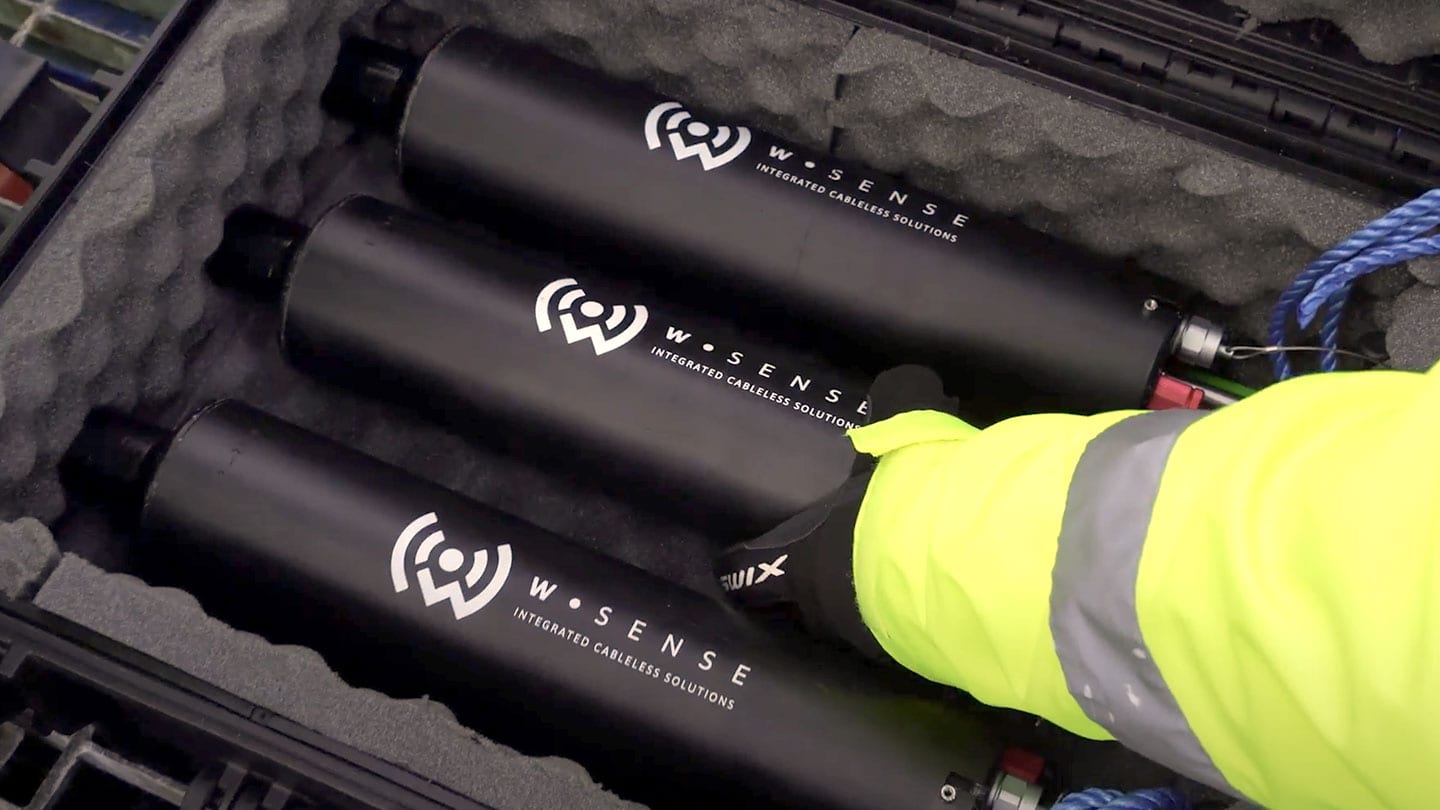
WSense combines underwater network infrastructure, wireless nodes and gateways, software, cloud-based monitoring and integration with third-party sensors and robotic systems. This allows data to move from equipment below the surface into the systems used by operators, researchers and decision-makers on land. Its technology can operate in both shallow and deep water, with applications extending to depths of up to 3,000 meters.
The result is an Internet of Underwater Things, or IoUT.
A sensor monitoring a subsea asset can communicate without a permanent physical data connection. Multiple devices can form networks. Autonomous underwater vehicles can exchange information with infrastructure around them. Environmental data can be collected continuously rather than through occasional manual intervention.
That matters because the underwater world is becoming more important to almost every major industrial system. Energy infrastructure is moving offshore. Subsea cables carry critical communications. Ports and coastal infrastructure need continuous monitoring. Autonomous systems are taking on more inspection and operational tasks. Defense and security organizations need greater awareness of what is happening below the surface. At the same time, scientists and governments need better ocean data to understand changing marine ecosystems.
WSense sits across these worlds. Its public customer and partner network has included companies and institutions across energy, telecommunications, defense, science and ocean conservation, including Aker BP, Eni, Saipem, Leonardo and Fincantieri.
02Why we invested
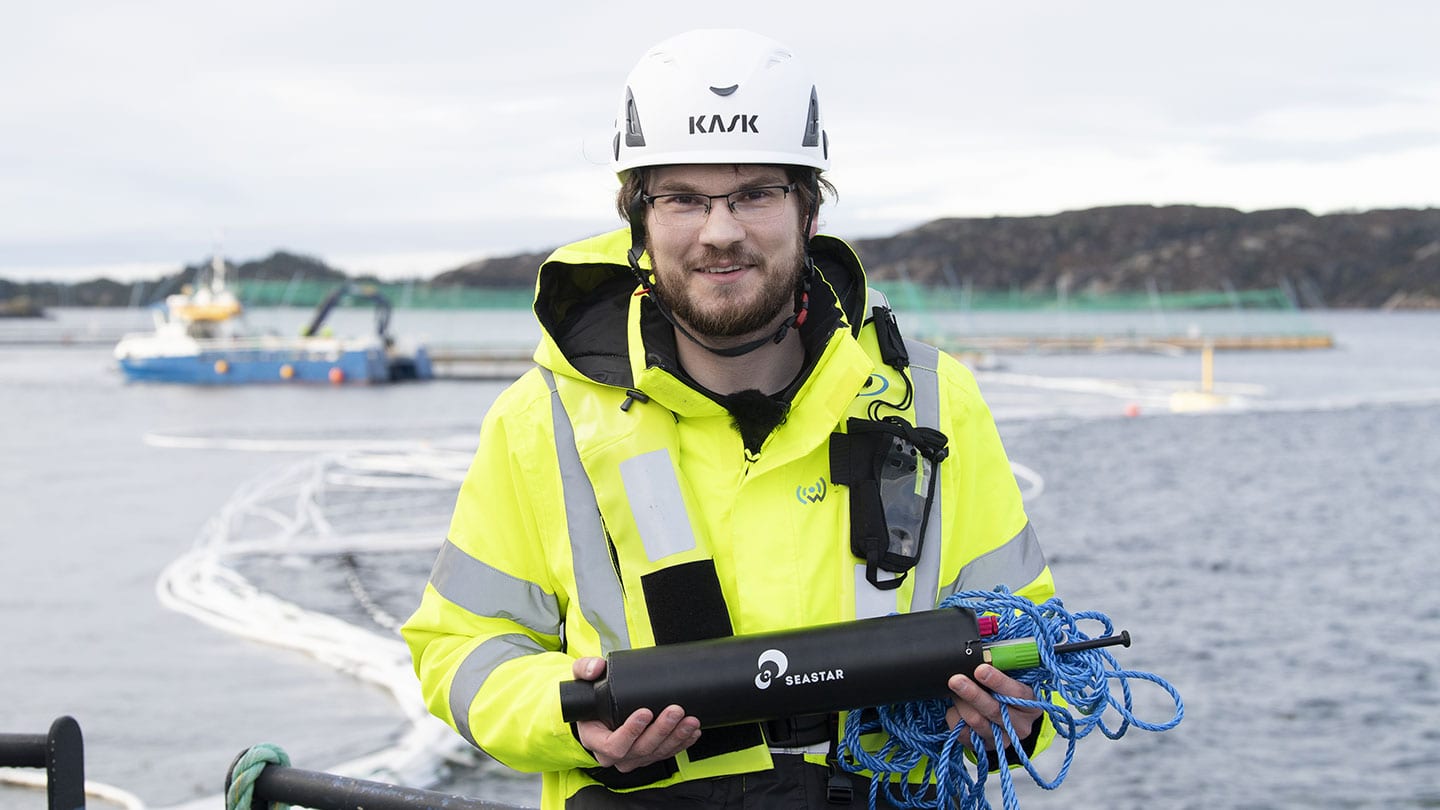
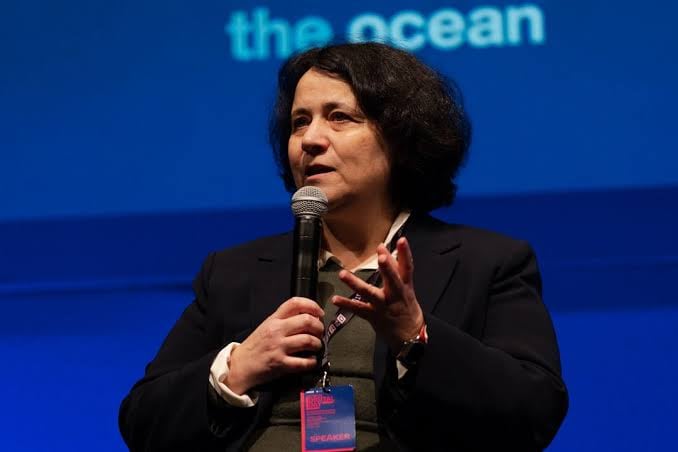
Our relationship with WSense began in 2023 through the Deep Tech Alliance, where RunwayFBU’s Sagar Chandna first met founder and CEO Chiara Petrioli and the WSense team. What made the company interesting was not simply that the underlying technology was advanced. We saw three things coming together.
First, WSense was solving a technically difficult problem with technology that had been developed over many years of research and engineering. Second, the potential market was global: the need for subsea connectivity stretches across energy, infrastructure, maritime, defense, telecommunications and environmental monitoring. Third, and particularly important for us, the technology had a very clear connection to industrial needs we could see in Norway.
Norway has some of the world’s deepest competence in offshore energy, maritime systems and subsea operations. It is also home to operators managing highly complex infrastructure in environments where reliability, safety and access to data matter enormously.
WSense therefore fit naturally with how we think about industrial technology investing. The best industrial technology companies do not begin with technology looking for a problem. They solve difficult problems that already exist inside real industries, then build technology capable of solving them at global scale.
We invested in WSense in 2023 as part of its Series A financing. At the time, we described the relationship as more than an investment: an opportunity to combine WSense’s technology with access to an industrial ecosystem where the company could deploy, validate and refine what it was building.
03Beyond the investment
For us, investing is only the starting point.
Industrial companies scale differently from many traditional software businesses. A great product is necessary, but it is rarely sufficient. Founders need access to operators who understand the problem. They need customers willing to test emerging technology in real environments. They need technical stakeholders who can challenge assumptions, procurement organizations capable of buying new solutions, and eventually reference customers who give the rest of the market confidence to follow.
That is where we believed we could contribute. After investing, we worked closely with the WSense team to help navigate the Norwegian industrial landscape and connect the company to relevant operators and partners.
One of those relationships was Aker BP. Through our industrial network, we helped bring WSense and Aker BP together. What began as an introduction developed into a real industrial relationship, with WSense subsequently developing subsea networking solutions with Aker BP. WSense today publicly lists Aker BP among its customers and partners.
Other connections into the Norwegian ocean ecosystem followed, as WSense established a presence in Bergen and expanded its activity in the market.
The relationship also continued on the investment side. When WSense raised its pre-Series B financing in 2025, RunwayFBU invested again alongside existing investors, with Fincantieri joining the round as a new strategic investor.
For us, that progression is important. An industrial investor should not only ask whether a company can raise its next round. The more interesting question is whether the technology is becoming more relevant to the customers and industries it was built to serve.
04From strategic partner to majority owner
Another industrial relationship was developing at the same time.
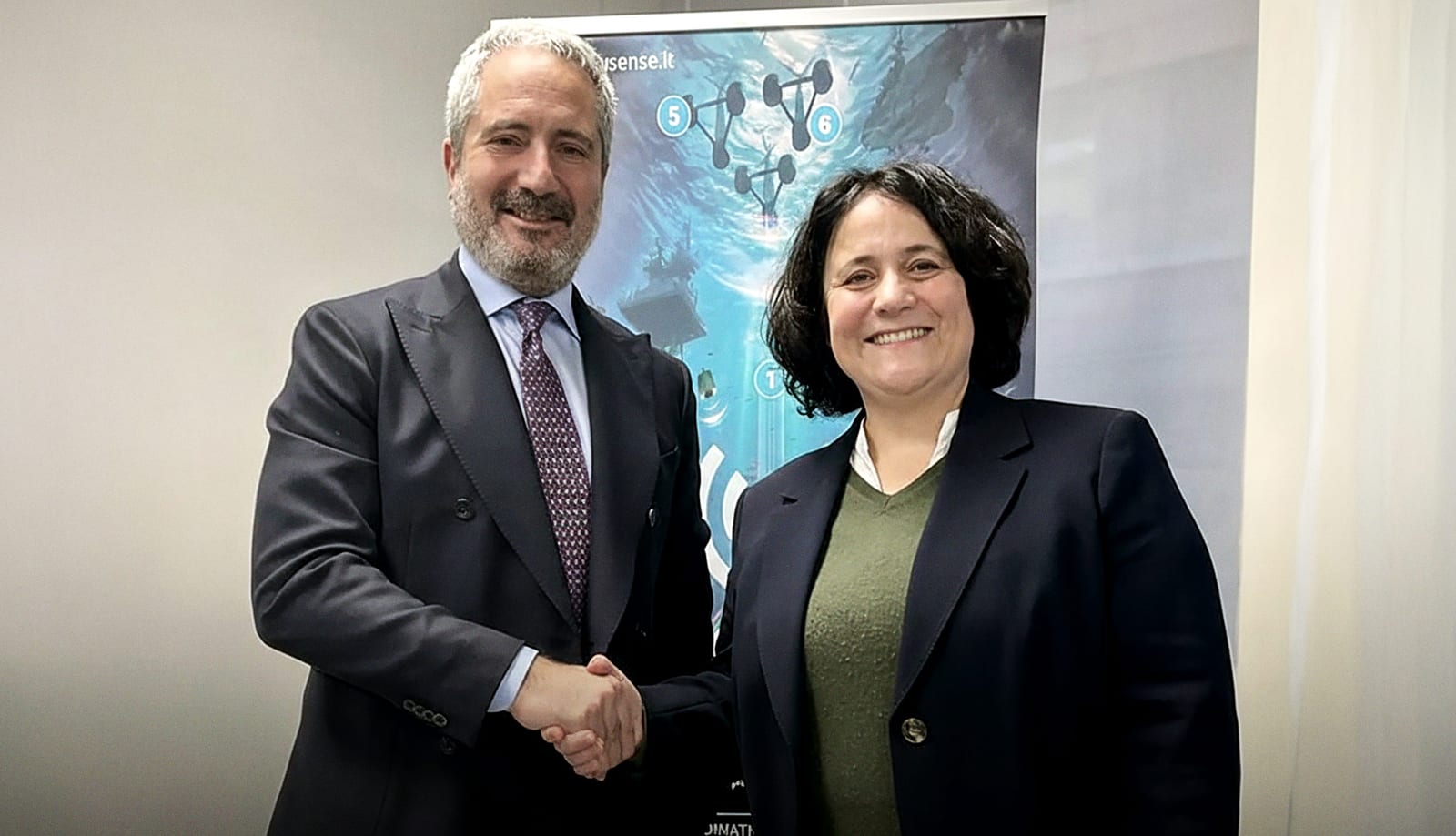
WSense and Fincantieri began collaborating in 2023. Fincantieri subsequently invested in the company in 2025, before the relationship expanded further through commercial and technology agreements.
In early 2026, the companies announced an agreement to co-develop advanced wireless technology for the underwater domain. Fincantieri also began integrating WSense technology into its DEEP system for monitoring and protecting critical infrastructure, while the companies expanded their collaboration into environmental and structural monitoring.
The progression is instructive. Collaboration became investment. Investment became deeper technology and commercial integration. And that relationship has now led to an agreement for Fincantieri to become the majority owner of WSense.
In July 2026, Fincantieri announced agreements to acquire majority positions in WSense and three other specialist companies as part of a major expansion of its underwater business. The ambition is to create a vertically integrated underwater technology platform spanning hardware, software, telecommunications, autonomous vehicles, sensors and services.
Within that ecosystem, the role of WSense becomes particularly clear. Fincantieri itself describes a future in which underwater vehicles, platforms, sensors and infrastructure increasingly need to work together. In one example given by the group, autonomous underwater vehicles conducting seabed surveys are connected through communication systems developed by WSense.
In other words, as more intelligence, autonomy and infrastructure moves below the surface, connectivity becomes a foundational layer. That is the layer WSense has spent years building.
05What this journey tells us about industrial technology
For RunwayVC, the transaction represents an exit. But the journey matters at least as much as the outcome.
When we first met WSense, we saw a deeply technical company tackling a problem that was relatively invisible outside specialist industries. Three years later, underwater infrastructure has moved much closer to the center of conversations around energy security, autonomy, defense, communications and critical infrastructure.
The technology did not become strategically relevant overnight. The relevance was already there. The market caught up.
That is one of the patterns we look for when investing in industrial technology. We want to find founders who understand a difficult problem deeply, often because they have spent years close to the underlying technology or industry. We want technology with genuine technical depth rather than a thin layer around existing capabilities. And we want markets where customers have a real reason to adopt, not simply an interest in experimenting.
But there is another part of the equation. Capital can help a company build. Access can help it become industrial.
Industrial technology needs places to be tested, people willing to challenge it and customers willing to become early adopters. It needs founders and industrial operators in the same room often enough for technical possibility to become operational reality.
That has been an important part of our relationship with WSense, and it remains central to how we want to invest.
06The next chapter
Fincantieri’s proposed majority acquisition is not the end of the WSense story.
It gives the company a significantly larger industrial platform from which to scale its technology, while placing WSense inside a broader strategy to connect and orchestrate the underwater domain.
For Chiara and the team, it is the next stage of a journey that began with university research and evolved into a global deeptech company working with some of the world’s most sophisticated industrial organizations.
For us, it is also a reminder of why we invest in this category. The next generation of important technology companies will not all be built around what happens on a screen. Many will live inside the physical systems the world depends on: energy infrastructure, machines, robots, ships, factories and critical assets.
And increasingly, some of those systems will be below the surface.
The ocean may still be the last great unconnected frontier. WSense is helping connect it.