PortfolioSonair
Sonair makes 3D robot safety real with the world’s first certified ultrasonic sensor
Robots are getting smarter. Making them safe around people is the harder part.
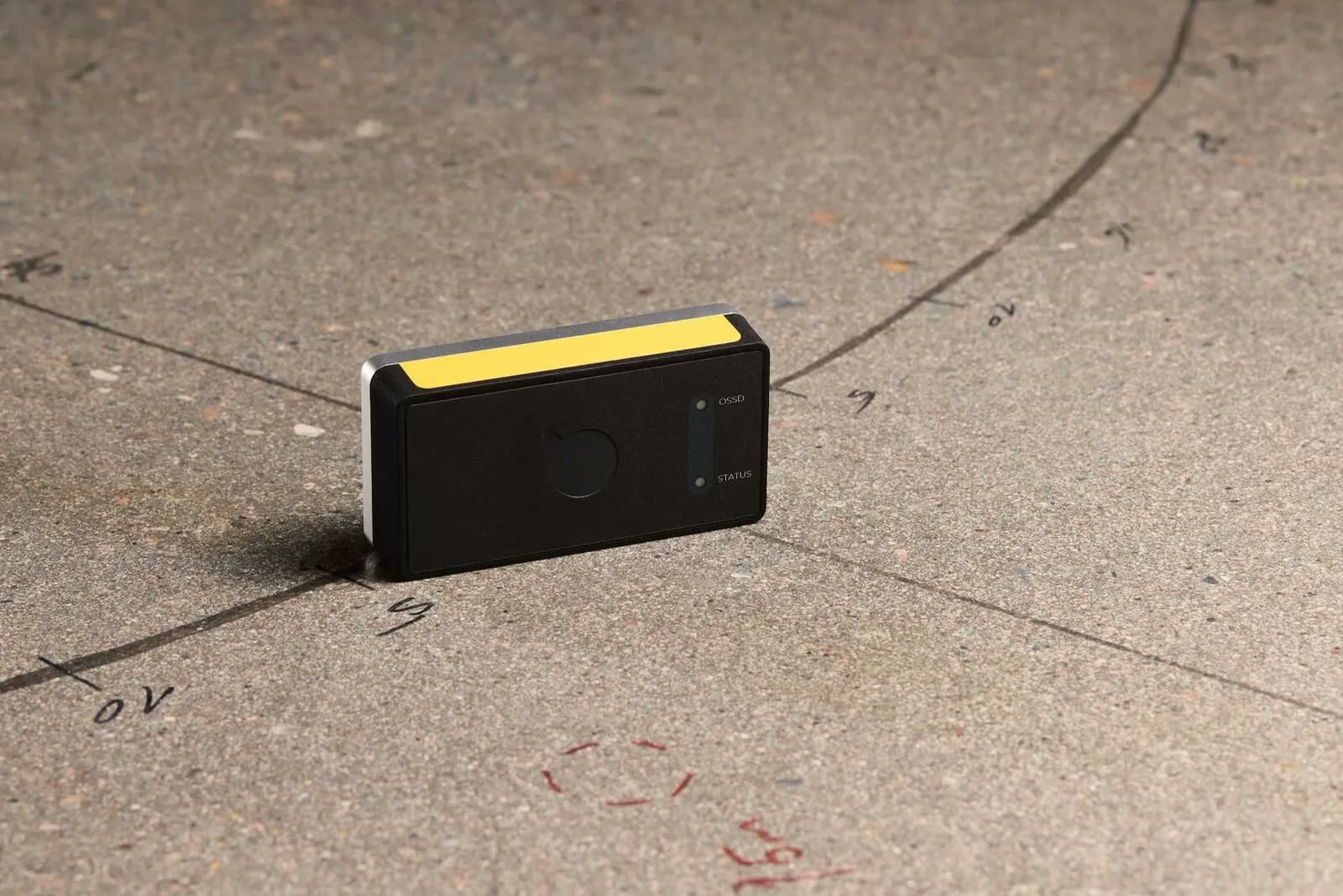
Sonair has reached a defining milestone with ADAR One, the world’s first safety-certified 3D ultrasonic sensor. Developed in Oslo and built on more than two decades of research at SINTEF, ADAR, Acoustic Detection and Ranging, uses sound rather than light to detect people and objects in three-dimensional space.
The significance goes beyond a new sensor. ADAR One gives autonomous robots and industrial machines an independently certified safety layer beneath their cameras, AI and navigation systems. It addresses one of the biggest constraints on physical AI: enabling increasingly intelligent machines to operate safely and reliably alongside people.
01From deep tech to certified industrial infrastructure
Sonair has taken ADAR from patented research to a commercially available, independently certified industrial safety product.
In June 2026, ADAR One received an EC type-examination certificate from exida, a notified body under the European Machinery Directive. Assessed against IEC 61496, IEC 61508 and ISO 13849, it is rated SIL 2 capable, Performance Level d, Category 2 and Type 3 ESPE. Its certified probability of dangerous failure is 1.5 × 10⁻⁷ per hour. These are demanding functional-safety thresholds, not internal performance targets. The certification documentation is publicly available from Sonair.
That distinction matters. Before certification, a new sensor can support navigation or operational awareness. After certification, it can become part of the safety architecture responsible for protecting people and bringing a machine into a safe state when needed.
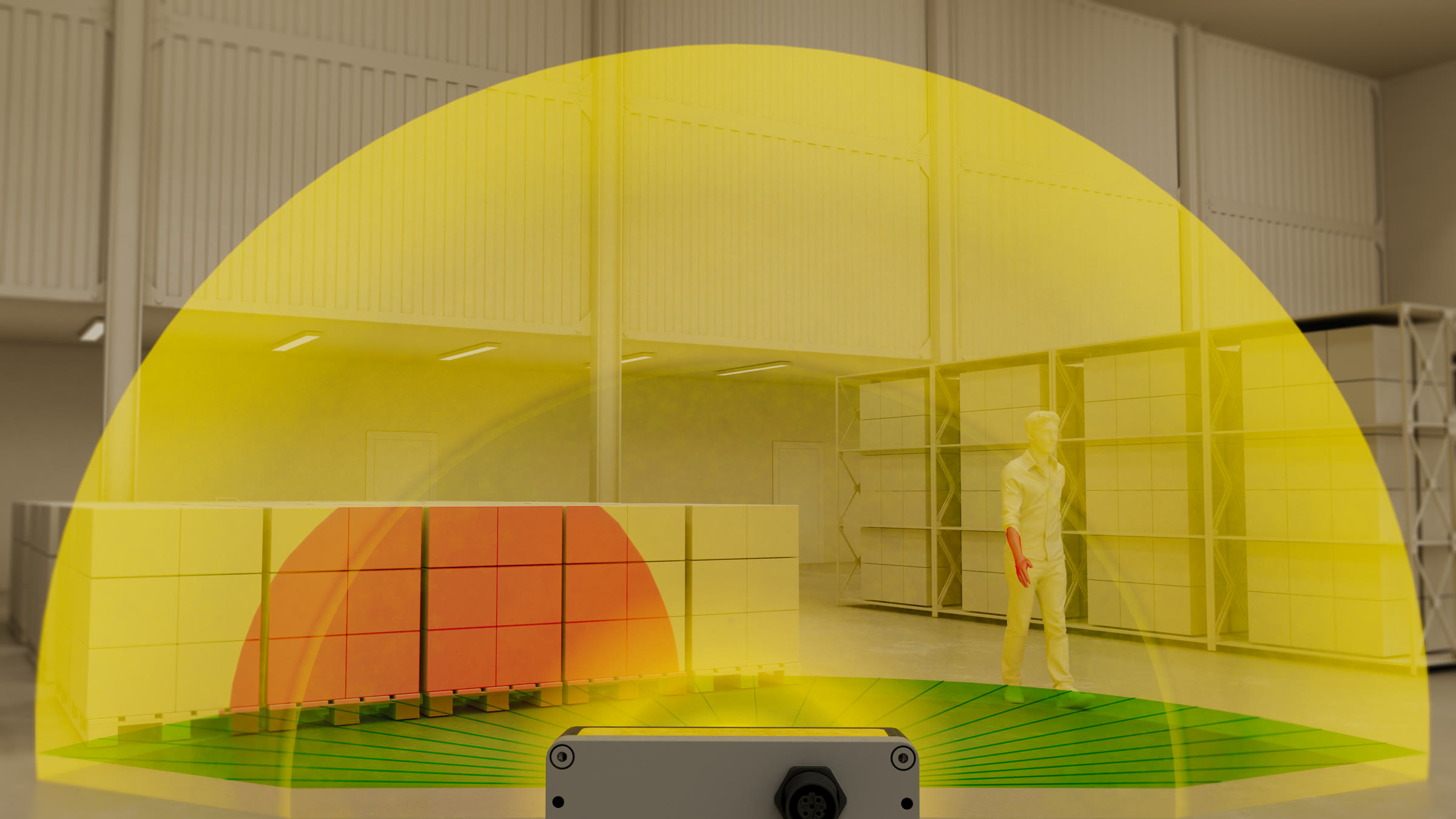
ADAR One provides a 180° × 180° field of view, detecting objects above, below and between the horizontal planes monitored by conventional 2D safety laser scanners. Because it uses ultrasound, it is independent of ambient light and can operate in darkness, dust, around reflective materials and in visually complex environments.
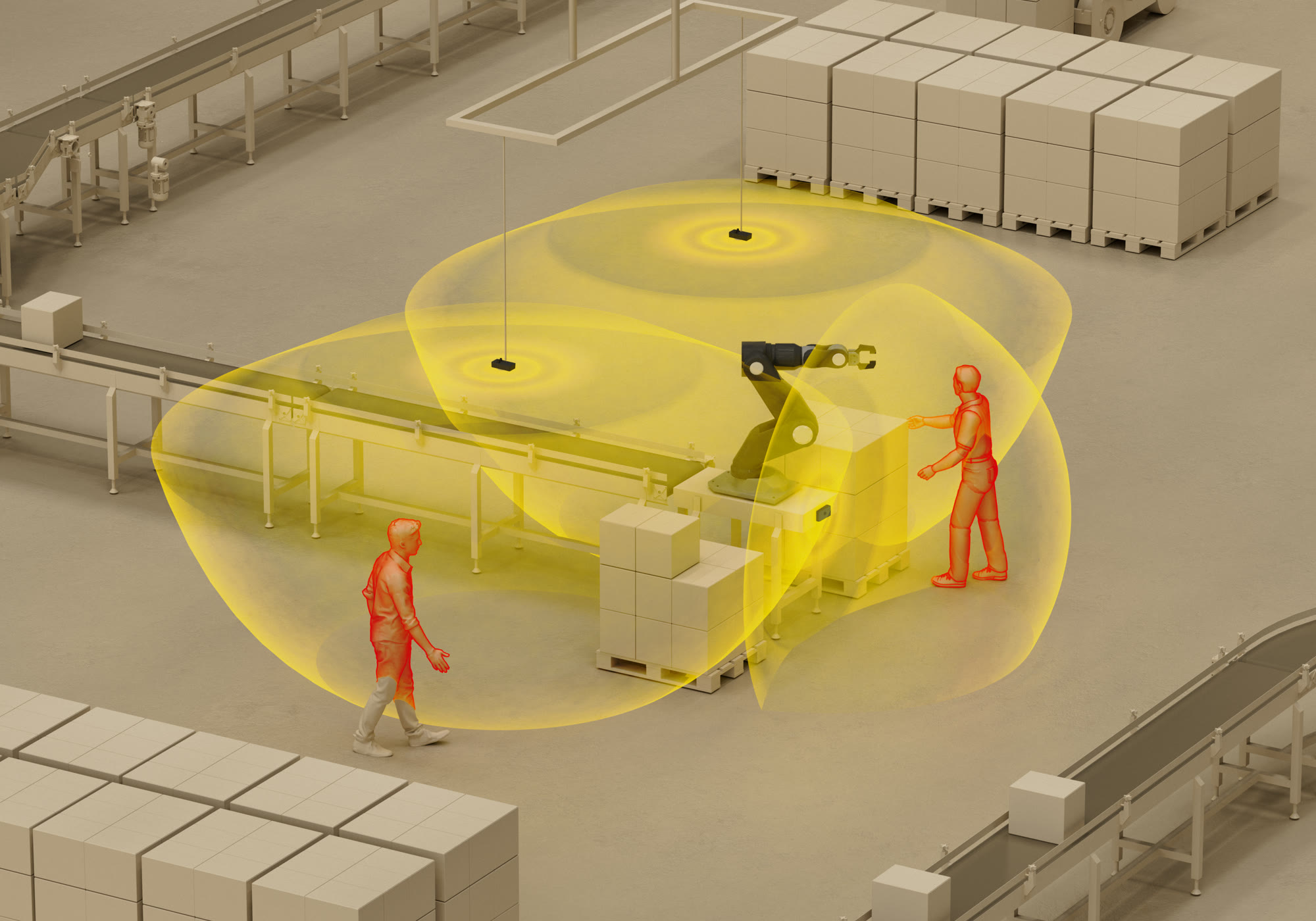
It is designed to complement cameras and AI perception, while providing a separate and deterministic safety function.
Commercial adoption is developing alongside the certification. ADAR One is now in series production and shipping on deployed industrial robots, and more than 100 robotics companies globally have evaluated the technology.
Cleanfix has integrated ADAR into the next generation of its RA660 Navi XL autonomous cleaning robot. One ADAR sensor consolidates functions previously handled by as many as 14 linear sensors, helping the robot operate in dynamic environments such as hospitals, schools, warehouses and commercial buildings. Read more about the Cleanfix deployment.
Following certification, beRobox also entered into an agreement to deploy ADAR One in future palletizing and depalletizing solutions, bringing certified 3D perception into an industrial setting where throughput, uptime and safe human-machine collaboration all matter.
Together, certification, series production and customer deployments mark Sonair’s transition from promising sensor technology to deployable industrial infrastructure. Read Sonair’s certification announcement.
02Why this matters for physical AI
When RunwayFBU invested in Sonair in 2024, the company was still moving through early customer evaluation.
Our thesis was that physical AI would not be constrained only by the intelligence of the models controlling machines. It would also depend on whether those machines could perceive the physical world safely, reliably and at an economically viable cost.
That distinction is becoming increasingly important. For robots to move beyond fenced industrial cells and into warehouses, hospitals, retail environments and other shared spaces, they need a dependable safety layer that keeps working when cameras, lighting conditions or AI models reach their limits.
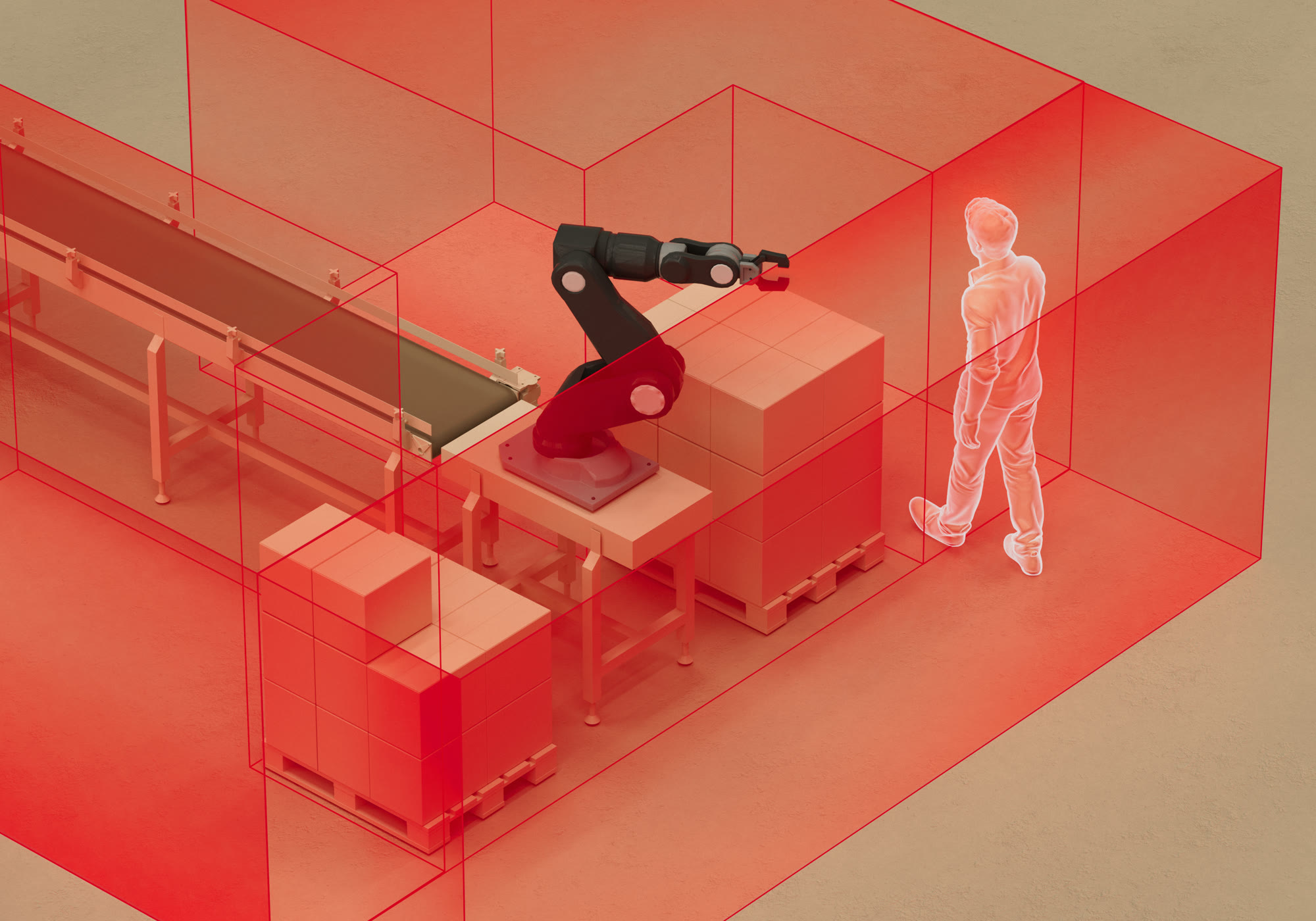
This is the gap ADAR is built to fill. Rather than trying to replace the robot’s intelligence or classify everything around it, ADAR creates a trusted three-dimensional safety envelope around the machine. It detects when a person or object enters a protected zone and enables the control system to respond safely.
We believe this separation between intelligent perception and certified protection could become a foundational architecture for physical AI.
03From conviction to commercialization
The technical achievement belongs to the Sonair team. Our role has been to provide sustained conviction, capital and industrial support through the transition from early customer evaluation to commercialization.
RunwayFBU first invested in Sonair’s 2024 financing round as ADAR was being introduced to robotics manufacturers through the company’s early-access programme. In 2025, we significantly increased our commitment as part of Sonair’s $6 million funding round.
That backing helped give the company the resources and time to industrialize the product, build its commercial organization, support international customers and complete the certification process. Read more about the 2025 financing and global rollout.
Beyond capital, we have supported Sonair as an active strategic and commercial sparring partner. Through RunwayFBU, Aker and our wider industrial network, we connect emerging technology with people who understand integration, procurement, operational risk and what it takes to move from a successful pilot to repeatable deployment.
04What comes next
The next step is scale.
Sonair’s focus is now on converting its global evaluation pipeline into commercial design wins, supporting customers integrating ADAR into production platforms and expanding deployment across autonomous mobile robots, automated guided vehicles, service robots and industrial machine-safety applications.
The larger opportunity is for ADAR to become a standard safety layer for autonomous machines, embedded into robot platforms in the same way foundational safety components are specified today.
Physical AI is moving from demonstrations to deployed machines. The infrastructure required to make those machines safe is becoming real with it.