PortfolioMuybridge
Muybridge: from an impossible idea to a new category in imaging
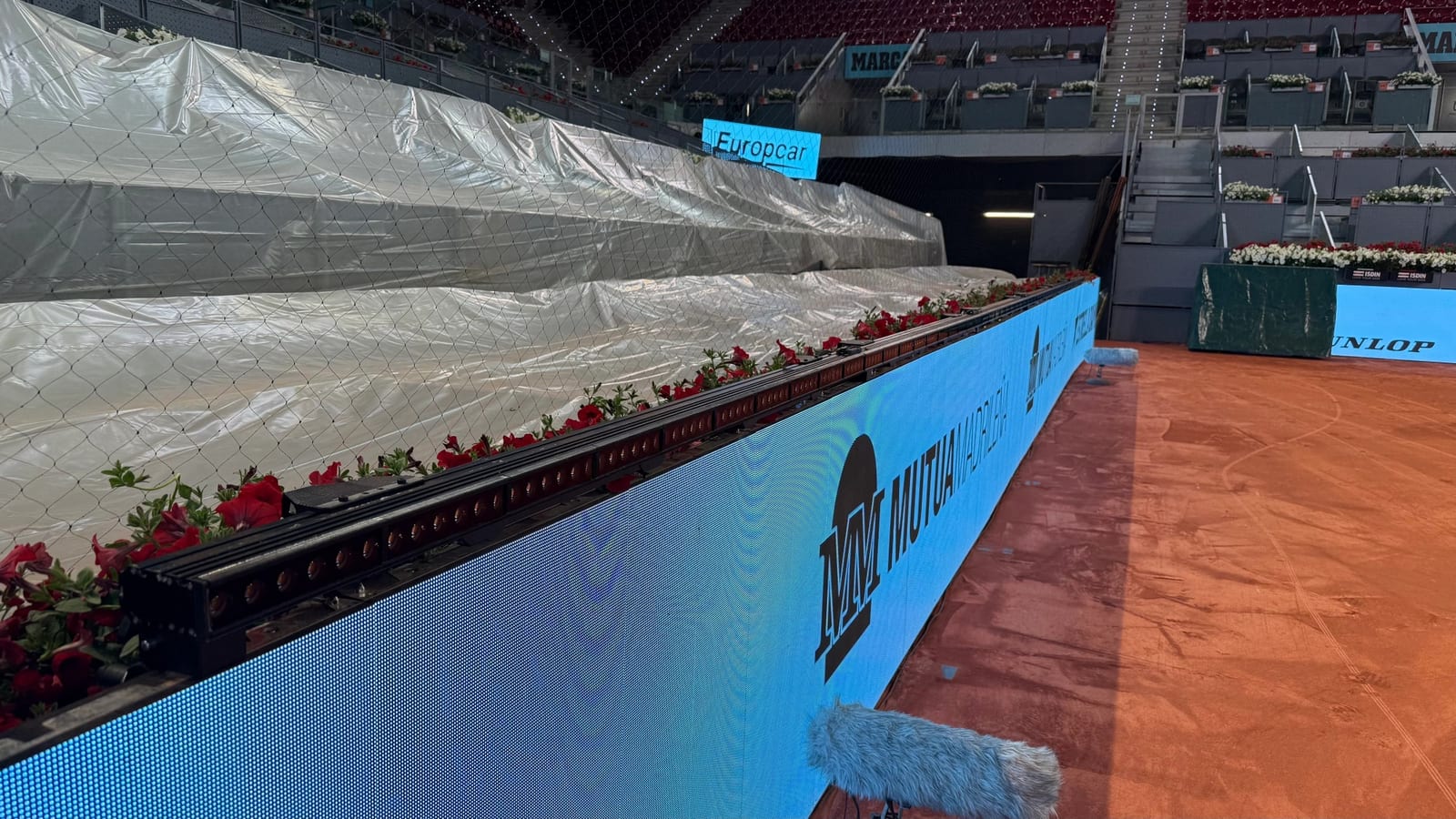
What if the camera did not have to be there at all?
We first met the Muybridge team in 2021, when their idea still sounded slightly impossible: remove the physical limitations of a camera by moving the camera itself into software. Five years later, Muybridge is being used on some of the biggest stages in global sport and has closed an oversubscribed $16 million Series A to accelerate its next phase of growth.
There are certain companies where the easiest way to understand the opportunity is to stop thinking about the existing product category. Muybridge is one of them.
A traditional camera has a simple limitation: it can only capture the world from wherever the physical camera happens to be. Put it on a tripod, a crane, a wire, a robot or a drone and you can move that position, but the laws of physics still apply. Muybridge asked a much more fundamental question.
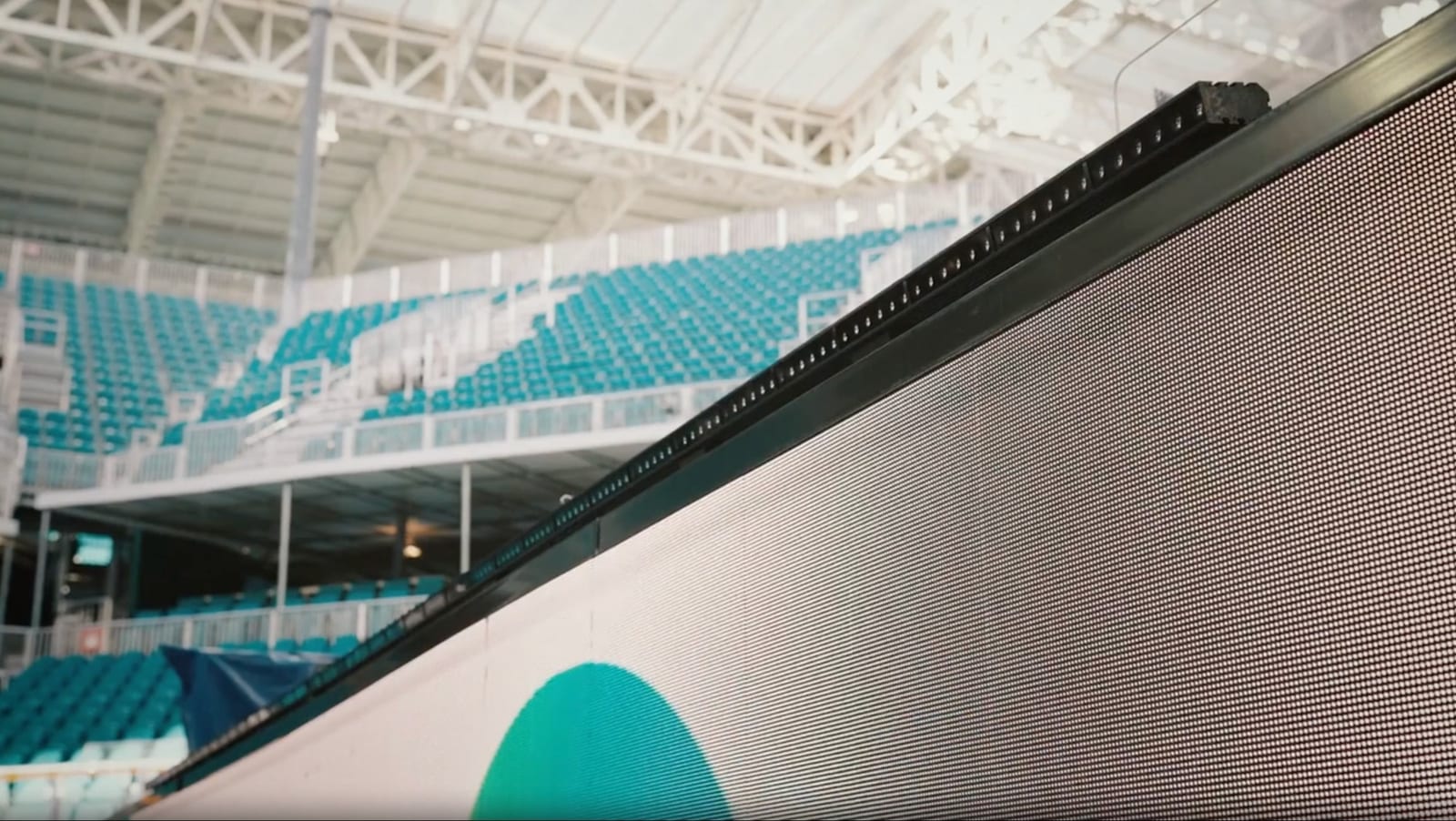
The result is what the company calls the weightless camera: a software-defined imaging system that uses arrays of compact sensors and real-time processing to reconstruct a scene, allowing camera positions, movements and perspectives to be created in software.
The camera can effectively move through places where no physical camera could go. No crane needs to move. No drone needs to fly. No operator needs to stand in the way.
That sounds impressive in a demo. The important part is that it is now working in production.
01We met Muybridge before the proof
Our relationship with Muybridge started in late 2021.
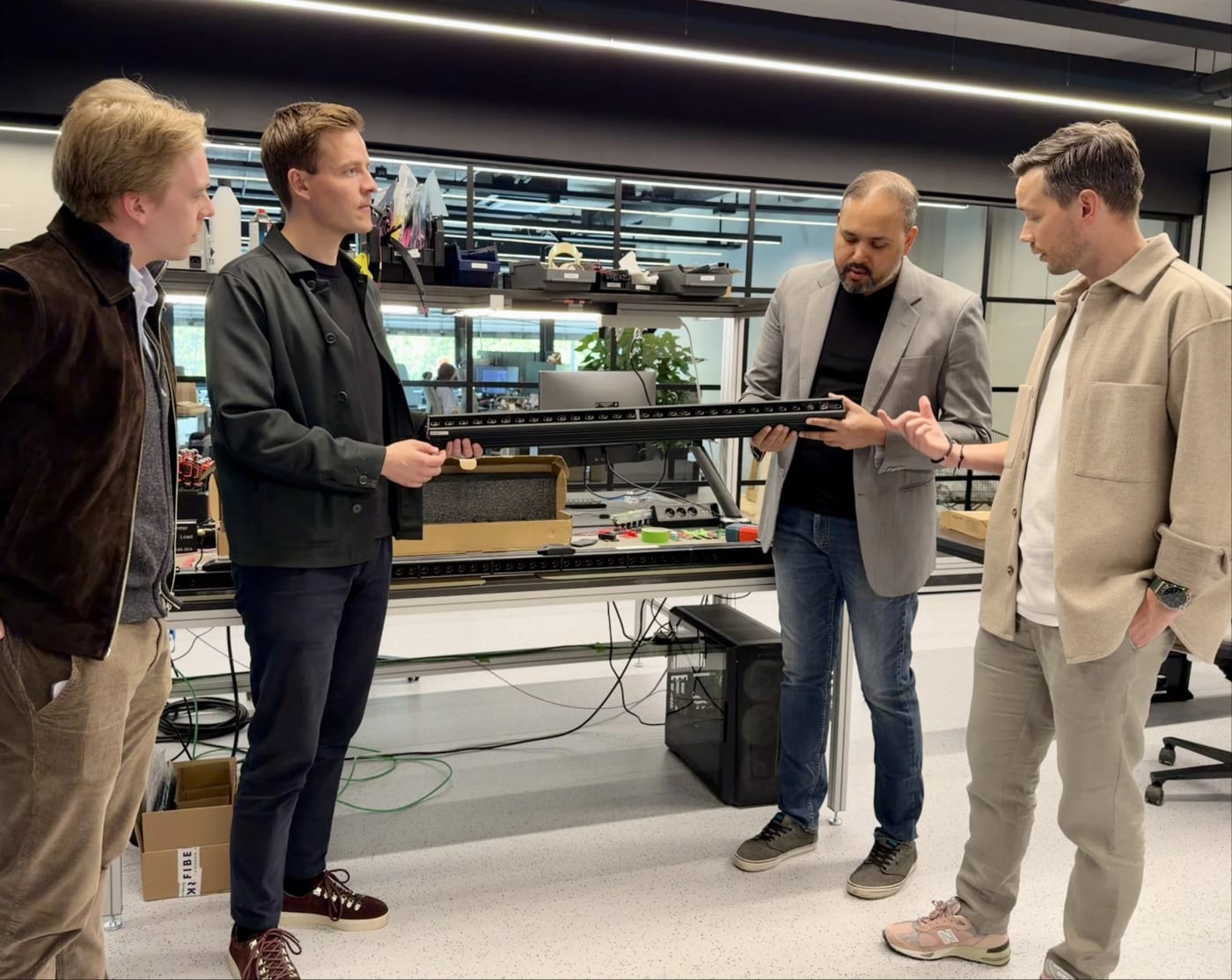
When Tor Bækkelund and Sagar Chandna first met Håkon Espeland, Anders Tomren and the team, Muybridge was still deep in the technology-building phase. The commercial opportunity was far less obvious than it is today.
But the ambition was. They were not proposing another camera product or an incremental improvement to existing broadcast equipment. They were trying to change the underlying architecture of how images could be captured.
Our early discussions quickly moved beyond the investment deck. We worked with the team to test where the technology could create value and brought it into conversations with industrial technology environments in our network. By December 2021, discussions with Cognite had already identified potential pilot installations at Aker Tech House and Aker Verdal.
That process mattered. Deep technology rarely follows a straight line from laboratory to product to customer. Early on, the job is often to find out whether something that is technically possible can solve a problem someone genuinely cares about.
We became investors in Muybridge in 2022 and have continued backing the company through subsequent stages of its development. Today, RunwayVC also supports the company at board level.
The conviction has remained remarkably consistent: Muybridge is not trying to build a better version of an existing camera. It is trying to define a new category of imaging technology.
02Then the world started seeing it
For several years, much of the progress happened where deeptech progress usually happens: behind the scenes. Engineering. Computer vision. Hardware. GPU processing. Integration. Testing.
Then came 2025.
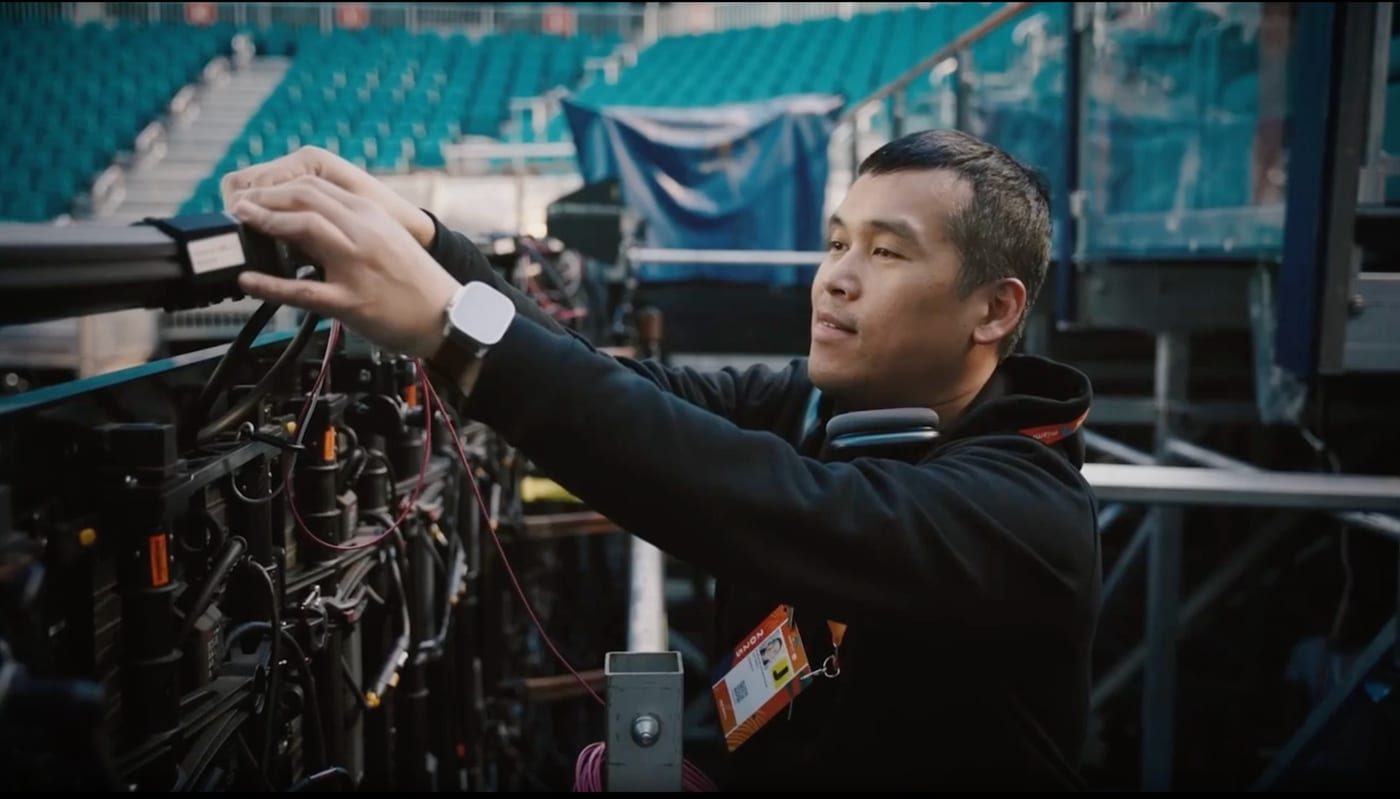
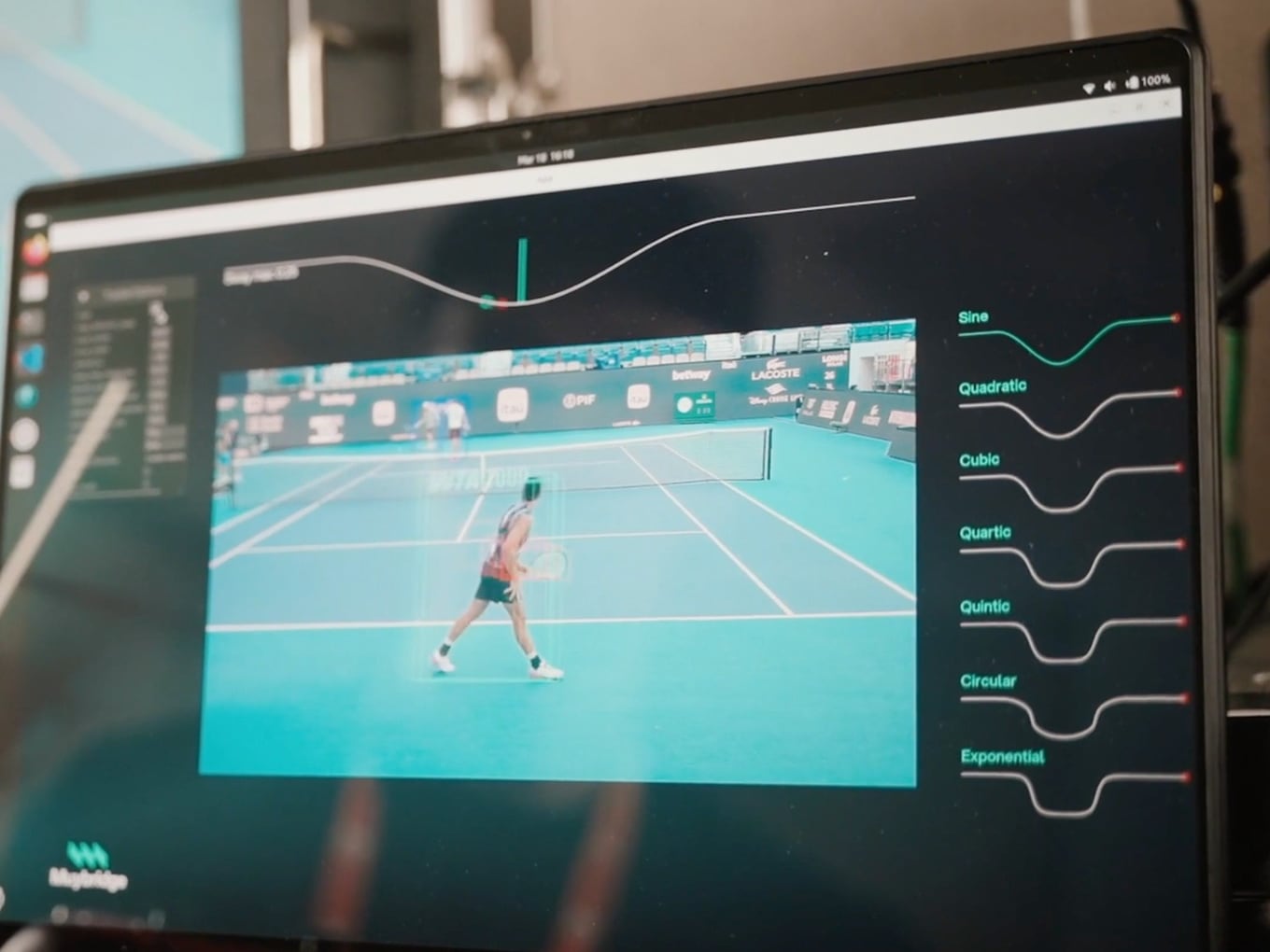
At the Miami Open, Muybridge’s technology produced camera movements that looked almost impossible. Viewers saw cameras tracking players from perspectives and along trajectories that would normally require physical equipment moving around the court.
Except there was no moving camera. Small sensors captured the environment while Muybridge reconstructed the scene and created the camera movement digitally. The response online was immediate.
From there, deployments expanded rapidly. Over the following year, Muybridge technology appeared across major European football leagues, the US Open and ATP Tour, the NBA, NHL, PGA TOUR, rugby and Premier Padel.
This is an important transition for any deeptech company. The question changes from “Can this technology work?” to “How quickly can this technology scale?”
The commercial numbers are beginning to reflect that change too. Muybridge describes 2025 as its first commercial year. By the end of the first quarter of 2026, the company had already generated more revenue than during the whole of 2025.
That is a very different company from the one we first met in 2021.

03The next phase: a $16 million Series A
In May 2026, Muybridge announced an oversubscribed $16 million Series A, led by Investinor, Fairpoint Capital, Idékapital and RunwayVC, then operating as RunwayFBU, alongside Nordic technology founders and operators.
For us, participating again was a continuation of a relationship built over several years rather than a new investment thesis.
The capital gives Muybridge the ability to accelerate expansion across Europe and the US, strengthen its commercial organization and continue developing the underlying imaging platform.
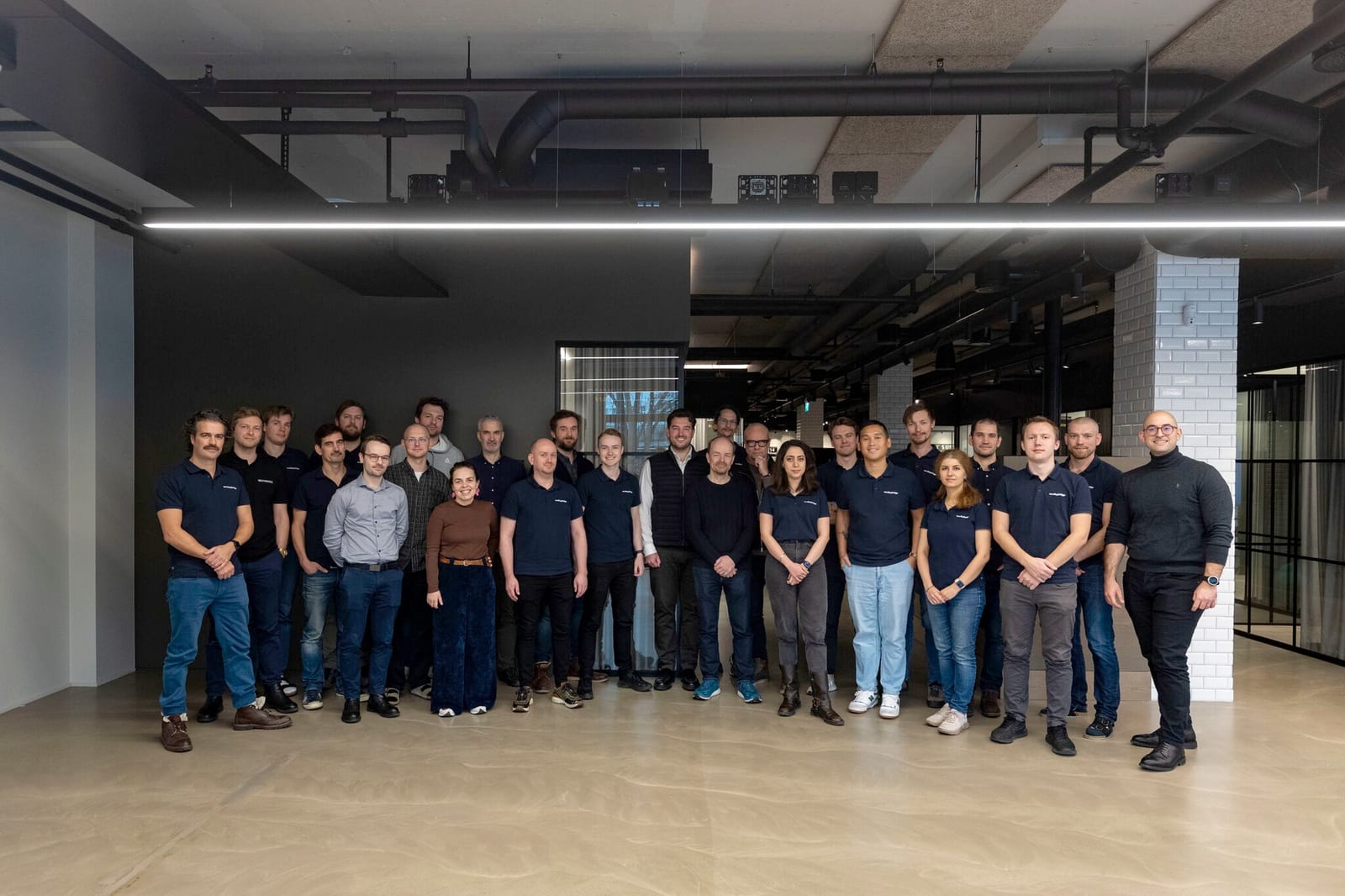
The organization is also changing accordingly. At the time of the round, Muybridge had grown to more than 30 employees, with the large majority still working in product development and research. The company is now adding commercial and operational capacity while continuing to hire in areas including computer vision and business development in both Europe and the US.
That balance matters. Muybridge is scaling commercially without losing the technical depth that created the opportunity in the first place.
04From product to platform
The most interesting part of the Muybridge story may still be ahead.
Sport and broadcasting are powerful initial markets because the value of the technology is immediately visible. Put a new camera angle on a Grand Slam tennis court, a Bundesliga pitch or beside a PGA TOUR golfer and millions of people can instantly understand what has changed.
But sport may ultimately be the beachhead rather than the boundary. The underlying technology is a real-time visual computing platform.
Muybridge already works with major industry players including Sony and NEP Group, and its architecture supports existing broadcast workflows as well as APIs and SDKs that allow other products and systems to be built around it.
Over time, the same ability to understand and reconstruct physical environments could have applications in automated sports officiating, security, physical AI, autonomous systems and industrial sensing. Muybridge itself sees an opportunity extending well beyond broadcasting.
That is where the company becomes particularly interesting to us at RunwayVC. The long-term opportunity is not simply to sell a new type of camera. It is to become part of the visual infrastructure through which both people and machines understand the physical world.
05What category leadership looks like
It is still early, and category leadership is something companies earn over years rather than declare in a funding announcement.
But some of the signals are becoming difficult to ignore.
Muybridge has moved from laboratory development to global production environments. It has proven its technology in situations where failure is immediately visible to millions of viewers. It is working with established industry partners rather than attempting to replace the entire broadcast ecosystem itself. And it is beginning to build a commercial organization capable of turning individual deployments into a repeatable platform.
Most importantly, Muybridge is increasingly competing against the limitations of the old way of doing things, rather than against one obvious startup competitor.
That is often what the early stages of a new technology category look like.
06The distance traveled
When we first met the team in 2021, the ambition was enormous and much of the proof still had to be built.
Today, the proof is appearing on television screens around the world.
The $16 million Series A is an important milestone. But for us, the more interesting story is the distance Muybridge has traveled to reach it, and how much larger the opportunity now looks than it did when we first sat down with the founders.
And they are still just getting started.